

Understanding da nang weather by month is the most crucial step before booking your flight to our beautiful coastal city. At Danang Locals, we have seen many travelers arrive in October expecting sunny beaches, only to spend their holiday inside a raincoat. To help you avoid that, we have compiled this comprehensive guide based on our years of living right here in Central Vietnam.
Whether you are looking for the best time to visit Da Nang or wondering what to pack, we have got you covered.
What is the Climate like in Da Nang?
Da Nang features a Tropical Monsoon Climate, which serves as a transition zone between the four distinct seasons of Northern Vietnam (Hanoi) and the two-season heat of the South (Ho Chi Minh City). This unique position gives us a climate that is diverse and sometimes unpredictable.

The most important thing to understand is that our weather is dictated by the monsoons. We don't have winter, spring, summer, and autumn in the Western sense. Instead, we have a Dry Season (roughly January to August) and a Wet Season (September to December). The average temperature hovers around 26°C (79°F), but this is misleading. Due to the consistently high humidity (often above 80%), the "Real Feel" temperature is always more intense than what your weather app says.
💡 Local Insider Tip: Don't underestimate the "Sticky Factor." In Da Nang, sweat doesn't evaporate quickly. If you are walking around the city center (Hai Chau district) at noon, the heat radiates from the asphalt. We locals usually hide indoors from 11:00 AM to 2:00 PM. Do as we do: take a "siesta" and explore in the early morning or late afternoon.
Da Nang Weather by Month: A Detailed Breakdown (2026 Forecast)
To help you plan your specific dates, we have broken down the year into four major weather phases. Here is what you can really expect on the ground.
January to March (Spring Season)
This is arguably the most pleasant time to be in Da Nang. The aggressive rains of the previous year have stopped, and the air feels fresh and clean. Temperatures range comfortably between 19°C and 24°C (66°F - 75°F). It is cool enough to wear a light cardigan in the evenings but warm enough for a t-shirt during the day.
This period often coincides with Tet Nguyen Dan (Lunar New Year), the most important holiday in Vietnam. The city is decorated with flowers, and the atmosphere is festive. However, the ocean water can still be quite chilly (around 21-23°C), and the waves might be a bit choppy for swimming, especially in January. This is the perfect season for cultural exploration, visiting the Marble Mountains, or walking around Hoi An Ancient Town without sweating through your clothes.
💡 Local Insider Tip: If you visit during Tet (usually late Jan or early Feb), be aware that many family-run restaurants may close for 3-5 days. However, major tourist spots and hotel restaurants remain open. Also, book your accommodation months in advance as this is a peak domestic travel time.
April to June (Early Summer)
Welcome to the "Golden Season" for beach lovers. From April, the temperature starts climbing to 26°C - 32°C (79°F - 90°F). The sky is consistently blue, and the ocean calms down, turning that signature turquoise color you see on postcards.
This is the prime time for outdoor activities like snorkeling in Cu Lao Cham or paragliding over the Son Tra Peninsula. A major highlight during this period is the Da Nang International Fireworks Festival (DIFF), which usually kicks off in June. The city comes alive with lights, music, and tourists from all over the world. It is vibrant, energetic, and sunny.
July to August (Peak Heat & Transition)
We need to be honest with you: it gets hot. Temperatures frequently hit 35°C to 38°C (95°F - 100°F), and the UV index is extreme. This is often due to the "Fohn Wind" (Gió Lào)—a dry, hot wind from Laos that evaporates moisture and makes the air feel like a hair dryer.
While the heat is intense, the mornings (5:00 AM - 8:00 AM) and evenings (after 5:00 PM) are fantastic. You will see thousands of locals rushing to the beach at dawn and dusk to cool off. Towards late August, you might start seeing sporadic afternoon thunderstorms—quick, heavy showers that clear the air and drop the temperature for the night.

💡 Local Insider Tip: During these months, do not plan to climb the Marble Mountains or walk across the Dragon Bridge at noon. You will likely suffer from heatstroke. Instead, spend your middays in air-conditioned malls or cafes, and save the outdoor exploration for after 4:00 PM.
September to December (Wet & Typhoon Season)
This is the challenging part of the year. The humidity creates a heavy atmosphere, and the rains begin in earnest. October and November are the peak months for the Central Vietnam Typhoon Season. Rainfall can exceed 500mm per month, often leading to localized flooding.
By December, the rain usually subsides slightly, but the temperature drops, introducing a "wet cold" (se lạnh) that feels much colder than the thermometer suggests (around 18-20°C). The sea is often rough with strong waves, making swimming dangerous. However, if you enjoy moody landscapes, empty streets, and sitting in a cozy coffee shop watching the rain fall over the Han River, this season has a quiet, melancholic beauty.
When is the Best Time to Visit Da Nang?
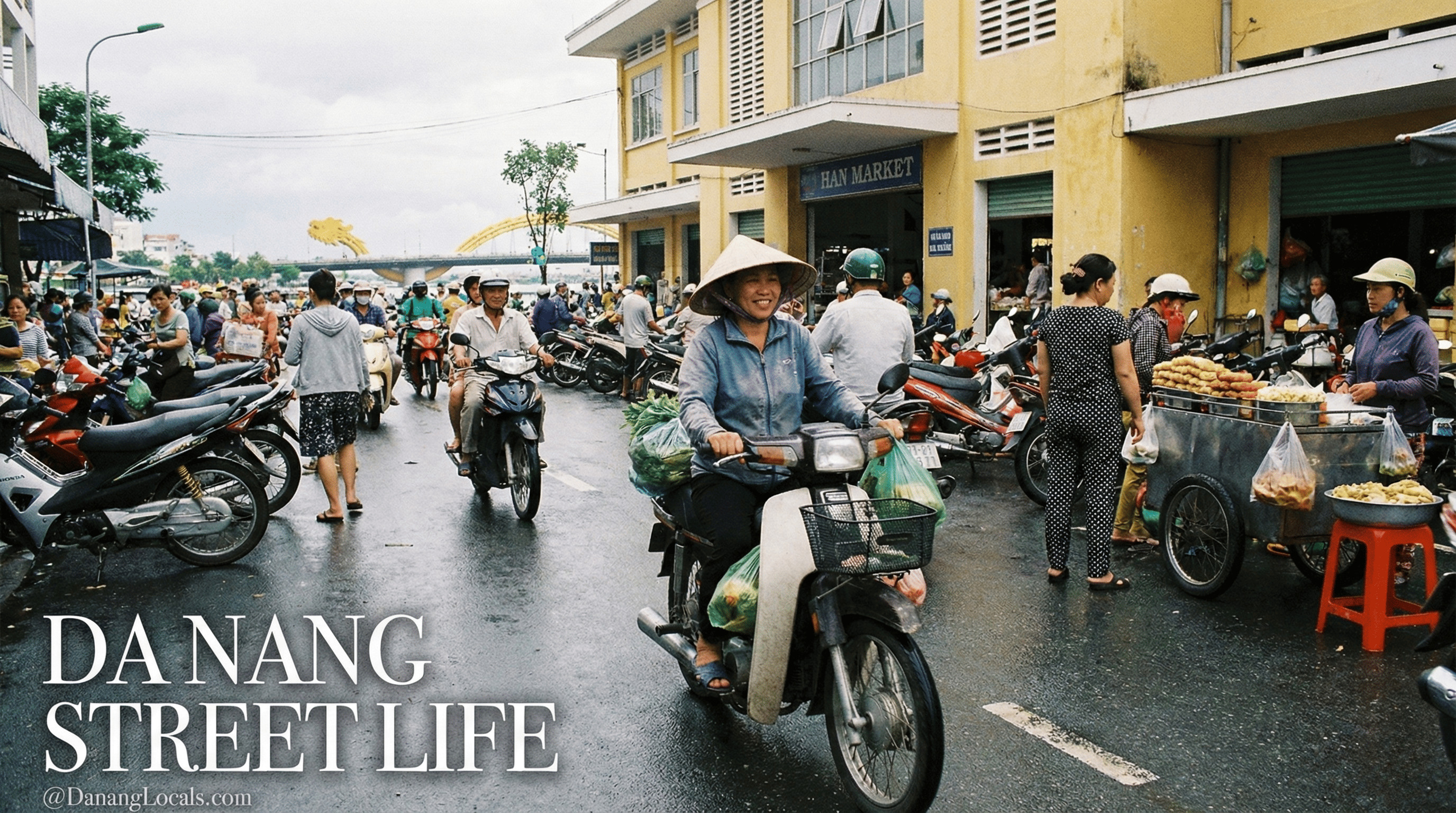
The "best" time depends entirely on what you want to do. Da Nang changes its personality with the seasons, so X might love May while Y prefers February.
Best for Beach Lovers (May - July)
If your main goal is Vitamin Sea, getting a tan, and enjoying water sports, May through July is your winner. The water is warm (around 28-29°C), the visibility for snorkeling is excellent, and the sunrise over My Khe Beach is spectacular. Just remember to hydrate constantly.
Best for Sightseeing & Outdoor Activities (February - April)
For those who want to hike, walk, and explore without heat exhaustion, February to April is ideal. The weather is dry but mild. This is the perfect window to visit the Ba Na Hills (where you can see the Golden Bridge clearly without too much fog or rain) or trek through the Bach Ma National Park.
Best for Budget Travelers (September - October)
If you are on a tight budget, the early rainy season can be strategic. Hotel prices often drop by 30-50%, and flights are significantly cheaper. You can stay in 5-star resorts for the price of a 3-star hotel. The trade-off is that you must be flexible; if it rains, you need a Plan B (like museums or indoor spas).
💡 Local Insider Tip: In September, the rain usually comes in short bursts in the afternoon. You can still enjoy the morning. But in October, it can rain non-stop for days. If you choose this time, book a hotel with a nice pool and gym so you aren't bored if you get stuck inside.
Is Da Nang Safe During the Rainy Season?
This is a Yes/No question with conditions. Generally, Yes, Da Nang is safe for tourists, but you must be vigilant.
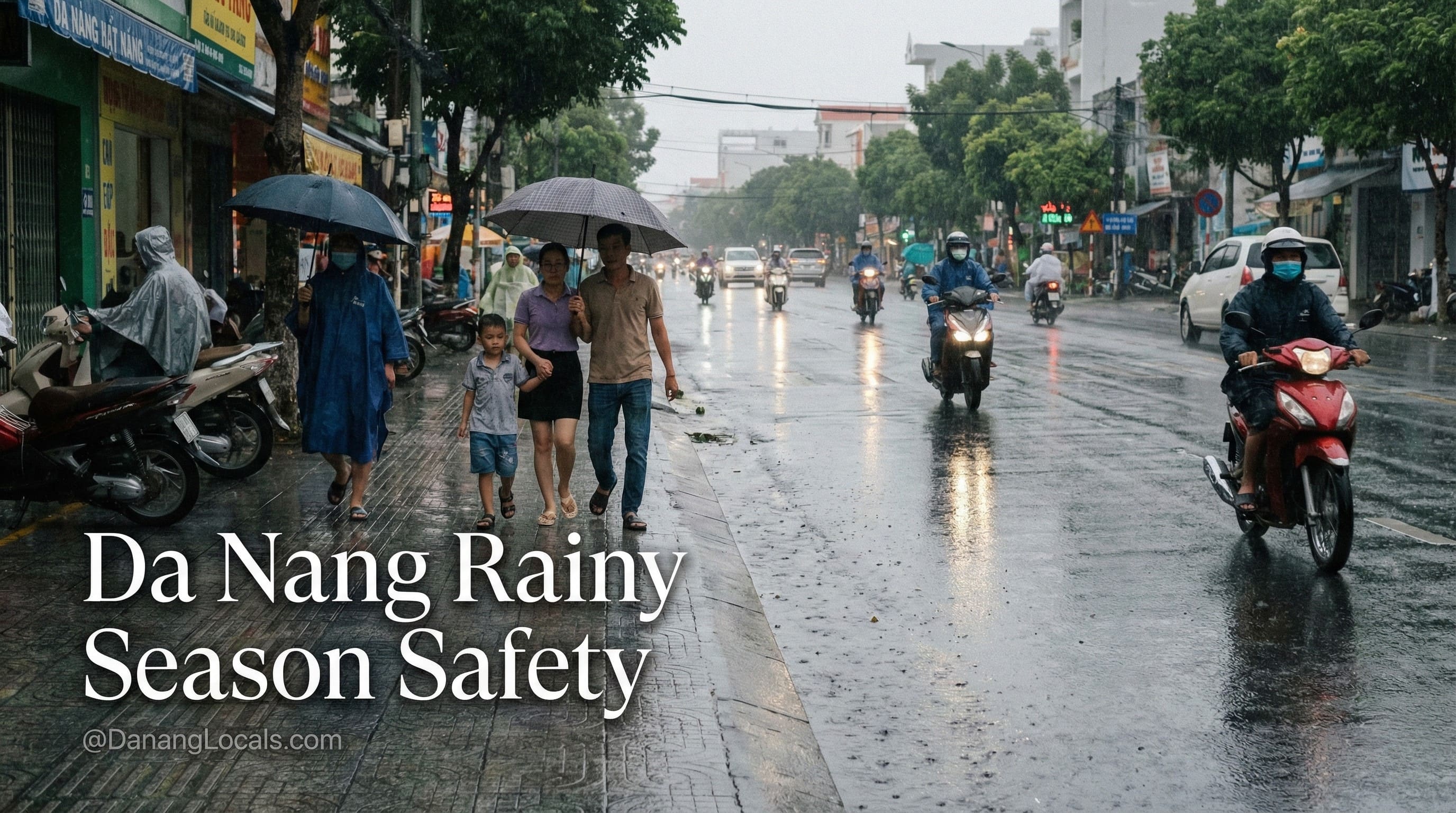
The city infrastructure handles rain relatively well compared to the ancient drainage systems of nearby Hoi An. While Hoi An often suffers from severe flooding that requires boats to move around the Old Town, Da Nang usually experiences only temporary localized flooding on specific streets which drains quickly once the rain stops.
However, the real danger comes from Typhoons and strong sea currents. When a storm warning is issued, local authorities are very strict; bridges may close, and tours will be canceled. The sea becomes extremely rough with dangerous undercurrents.
💡 Local Insider Tip: Download the app "Zalo" (Vietnam's main chat app) or follow "Danang Fantasticity" on Facebook. During storm season, these channels provide the fastest updates on weather warnings in English. If you see a "Red Alert," stay in your hotel.
What Should You Pack for Da Nang Weather?
Packing for Da Nang requires a strategy based on the season. Do not trust a generic "Vietnam Packing List" because the North and South are totally different.
Packing for the Heat (Dry Season)
Sun Protection: The sun here is aggressive. Bring SPF 50+ sunscreen, sunglasses, and a wide-brimmed hat.
Fabrics: Cotton, linen, and moisture-wicking synthetic fabrics are your best friends. Avoid thick denim or polyester.
Hydration: A reusable water bottle is essential (but fill it with filtered water only).
Packing for the Rain (Wet Season)
The "Poncho" Rule: Do not bring a heavy trench coat or just an umbrella. The wind will destroy your umbrella, and a coat will get soaked. Buy a high-quality "rain poncho" (áo mưa) that covers you and your backpack. This is what we locals use, especially on motorbikes.
Footwear: Leave your expensive leather sneakers at home. Bring waterproof sandals (like Crocs or Tevas) or plastic shoes that dry quickly. Walking in wet socks is the worst feeling.
Protection: A waterproof bag for your phone and passport is non-negotiable.
Understanding Da Nang's Micro-climates
Da Nang is geographically complex, with mountains, rivers, and the sea all close together. This creates "micro-climates" where the weather can be totally different just 20km apart.
Weather in Ba Na Hills vs. City Center
Ba Na Hills is located at an altitude of 1,487 meters. It possesses a Subtropical Highland Climate. The temperature up there is consistently 8°C to 10°C cooler than in the city center. You might be sweating in a tank top in Da Nang city, but shivering in the fog on the Golden Bridge.
Insider Note: Ba Na is famous for experiencing "four seasons in one day." It can be sunny in the morning, rainy at noon, and winter-cold by evening. Always bring a light jacket.

Weather in Son Tra Peninsula
Also known as Monkey Mountain, this area juts out into the sea. It is much windier than the city and often catches clouds that pass over the ocean. It is common to see the Lady Buddha statue shrouded in mist while the rest of the city is sunny. Ride carefully here as the gusts of wind can be strong on the coastal roads.
Frequently Asked Questions (FAQs)
Does it snow in Da Nang?
No, it virtually never snows in Da Nang. The lowest temperature recorded is rarely below 14°C. However, do not let that fool you. In December and January, the high humidity combined with the wind from the sea can create a "penetrating cold" (buốt) that feels much colder than 14°C in a dry climate. You won't need a snow parka, but you will definitely want a windbreaker.
Is it safe to swim in Da Nang in November?
Generally, No. November is the heart of the monsoon season. The sea is rough, the waves are high, and the water is brown due to river sediment. More importantly, there are often dangerous rip currents. The lifeguards will place Black Flags or Red Flags on the beach.
Strict Warning: If you see a red flag, do not enter the water. Even strong swimmers can be pulled out. Stick to the hotel pool during this month.
Essential Local Contacts for Travelers
To ensure your trip is safe and smooth, save these contact details. We hope you don't need them, but it is better to have them and not need them than the reverse.
Da Nang Tourism Promotion Center
Hotline: (+84) 236 3550 111
Website: danangfantasticity.com
Service: They speak English and can assist with complaints or tourist information.
Emergency Numbers
115: Ambulance (Cấp cứu)
112: Search & Rescue (Cứu nạn)
113: Police (Cảnh sát)
Weather Updates:
Always check the National Centre for Hydro-Meteorological Forecasting for the most accurate storm warnings.
We hope this guide helps you plan the perfect trip to our hometown. Da Nang is beautiful in every season if you know what to expect. If you are looking for more specific itineraries, check out our guide on Dananglocals.com or if you are heading south, don't miss our Hoi An weather guide. Stay safe and enjoy the journey!