

Getting around Da Nang is significantly easier and more enjoyable than navigating the chaotic streets of Hanoi or Ho Chi Minh City, thanks to its wide bridges, logical grid layout, and manageable traffic density. Whether you choose the freedom of a motorbike, the comfort of tech-taxis like Grab and Xanh SM, or the affordability of the public bus system, mastering the transport network is the key to unlocking the true soul of this coastal city.
However, choosing the right mode of transport depends entirely on your comfort level and itinerary. For the adventurous traveler, renting a motorbike offers unparalleled freedom to explore hidden alleys and the majestic Son Tra Peninsula, while families or those wary of Vietnam’s driving culture will find the ride-hailing apps cheap, reliable, and plentiful.
Beyond just picking a vehicle, you need to arm yourself with the right digital tools to avoid getting lost or ripped off. We will guide you through the essential apps every local uses, from the most accurate maps to the specific ride-hailing services that have recently revolutionized transport in Vietnam with electric fleets.
So, buckle up (or strap on your helmet)! Let's dive deep into the specific routes, legal requirements, and "unwritten rules" of the road that will transform you from a confused tourist into a savvy Da Nang navigator. If you ever feel unsure, remember that DanangLocals.com is here to guide you every step of the way.
What are the Best Modes of Transport for Getting Around Da Nang?
When friends visit me in Da Nang, the first thing I tell them is: "You have options here." Unlike other Vietnamese cities where you are forced into one mode of transport, Da Nang is a hybrid city.
The layout of Da Nang is split by the Han River. You have the City Side (shops, airport, local food) and the Beach Side (hotels, seafood, nightlife).
Why is Renting a Motorbike the Most Popular Choice?
For us locals, the motorbike is not just a vehicle; it is an extension of our legs. Renting a motorbike gives you the ultimate autonomy to chase the sunrise at My Khe Beach or climb the winding roads to the InterContinental without waiting for a driver.
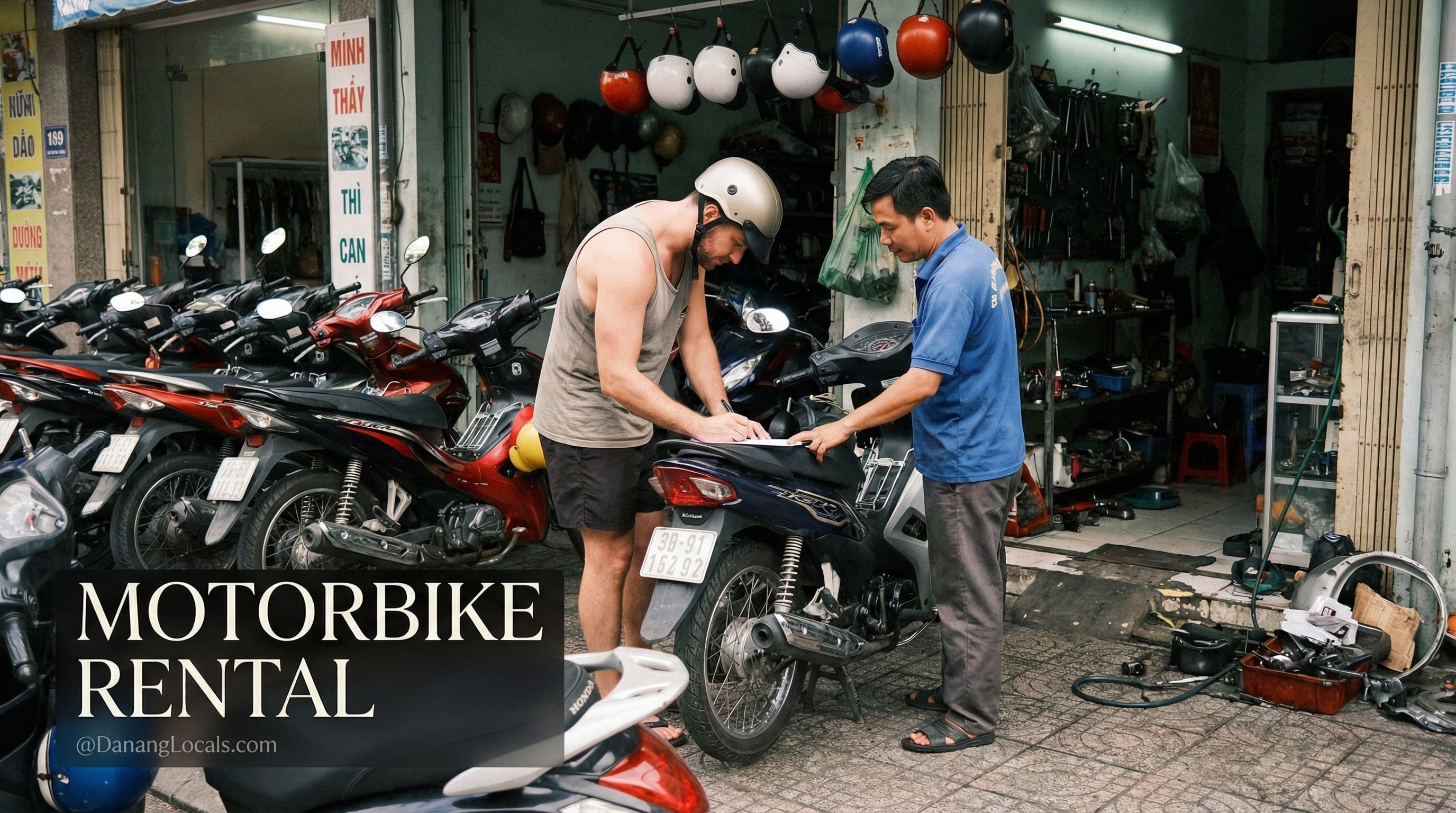
Specifically, the cost is incredibly low. You can expect to pay between 100,000 VND to 150,000 VND (approx. $4 - $6 USD) per day for a standard scooter (like a Honda Airblade or Yamaha Nouvo).
Local Insight (DanangLocals): When renting, avoid the cheapest bike on the lot. Ask for a "newer model" (xe mới). Before you drive away, check the brakes and the horn. If you plan to go up to Son Tra Peninsula or Ban Co Peak, you must rent a semi-automatic bike or a powerful scooter (125cc+), as many automatic scooters struggle on the steep gradients and can overheat brakes on the way down.
To save you from bad experiences, here is a trusted rental service we often recommend:
RECOMMENDED RENTAL: The Motorbike Station (or Song Han Motorbike)
Address: 196/41 Tran Cao Van, Thanh Khe District, Da Nang (Near the Train Station, delivery available).
Hotline/Zalo: (+84) 922 771 171
Opening Hours: 07:00 AM – 09:00 PM
Price:
- Semi-auto (Honda Wave, Sirius): ~100,000 - 120,000 VND/day.
- Automatic Scooter (Airblade, Vision): ~130,000 - 160,000 VND/day.
Highlights: Includes high-quality 3/4 helmets, free raincoats, and 24/7 breakdown support. Bikes are serviced after every rental.+1
Is the Public Bus System Convenient for Tourists?
Honestly? It depends on your patience. Da Nang has a subsidized bus system called DanaBus (yellow buses).
While it is the cheapest way to get around, the routes are fixed and often require walking to and from stops in the heat. It is great for a slow city tour if you are on a tight budget, but it lacks the "door-to-door" convenience of a bike or taxi.
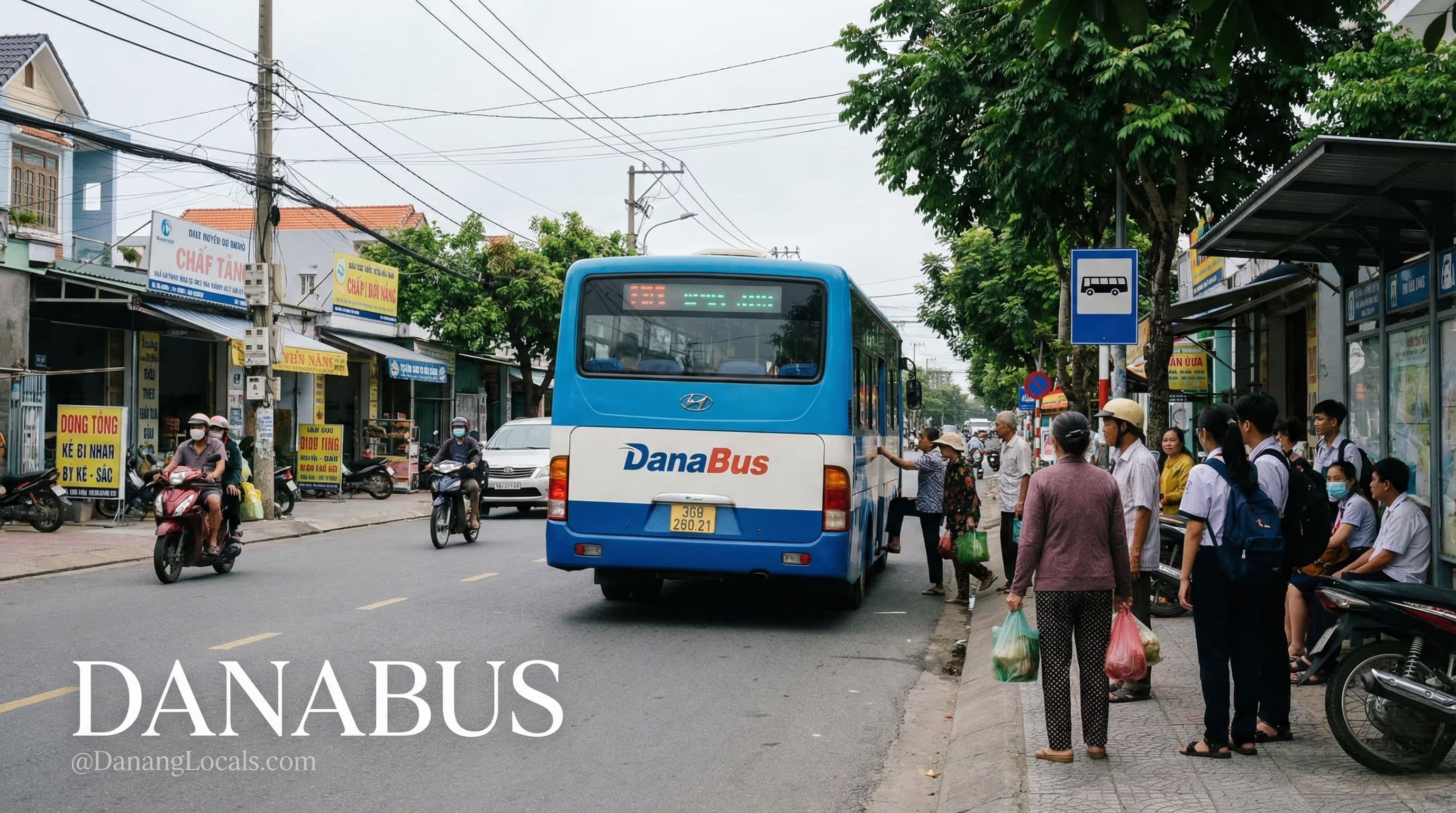
PUBLIC SERVICE: DanaBus (Da Nang Subsidized Bus)
Operations Office: 493 Tran Cao Van, Thanh Khe District.
Support Hotline & Lost & Found: (+84) 02363 711 468
Website for Routes: danangbus.vn
Recommended App: BusMap (Download on iOS/Android for real-time tracking).
Fares:
- Single Ticket: 6,000 VND/ride (Flat rate).
- Monthly Pass: 90,000 VND (Best for long-term stays).
Which Mobile Apps are Essential for Transport in Da Nang?
In 2024, you cannot survive efficiently in Da Nang without a smartphone. The digital infrastructure here is excellent, and getting around Da Nang is best done with a few key apps installed before you leave the airport.
Make sure you buy a local 4G SIM card (Viettel or Vinaphone are best) as soon as you land. Relying on café Wi-Fi is a recipe for getting lost.
How to Use Ride-Hailing Apps like Grab and Xanh SM?
Forget waving down a taxi on the street and worrying about the meter. In Da Nang, we use apps. Grab is the established giant, functioning exactly like Uber. You book, you see the price, you pay (cash or card).
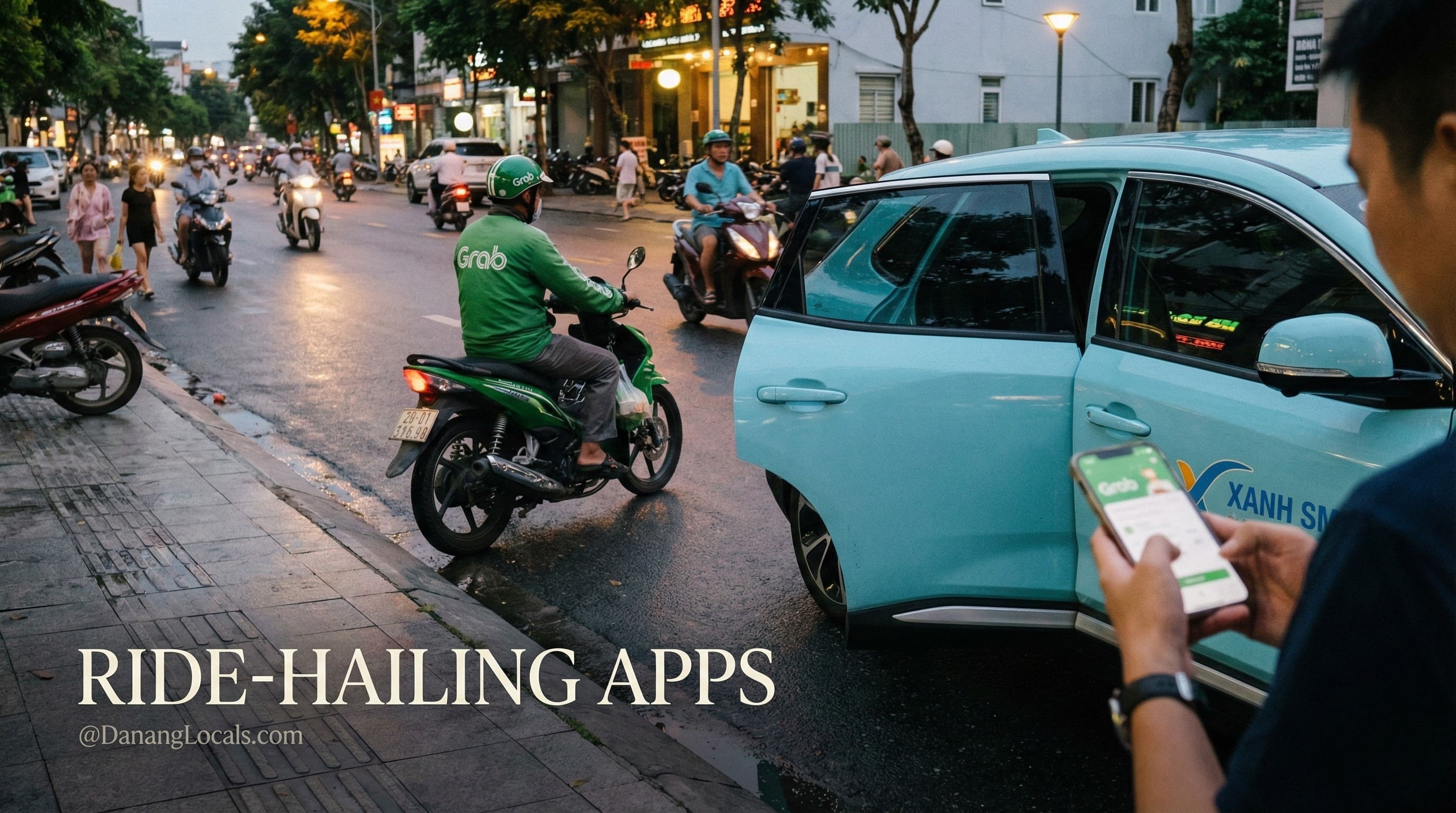
However, a new player has changed the game: Xanh SM (Green SM). These are the cyan-blue electric taxis (VinFast cars) you see everywhere.
Why we love them: They are odorless (no gasoline smell), silent, and the drivers are trained to a 5-star standard—very polite and helpful with luggage.
How to use: Download the "Xanh SM" app. It works just like Grab but often has better promotions and cleaner cars.
Local Insight (DanangLocals): During rainstorms (which happen often in October-November), demand spikes and prices surge. If you can't find a Grab, open the Xanh SM app. Often, one app will have drivers available when the other doesn't.
What is the Best Map App for Navigating Da Nang Roads?
Google Maps is the undisputed champion here. Waze and Apple Maps often lack the specific "Kiệt" (alleyway) data that is crucial in Vietnam.
Specifically, Google Maps in Da Nang includes motorbike-specific travel times, which are faster than car estimates.
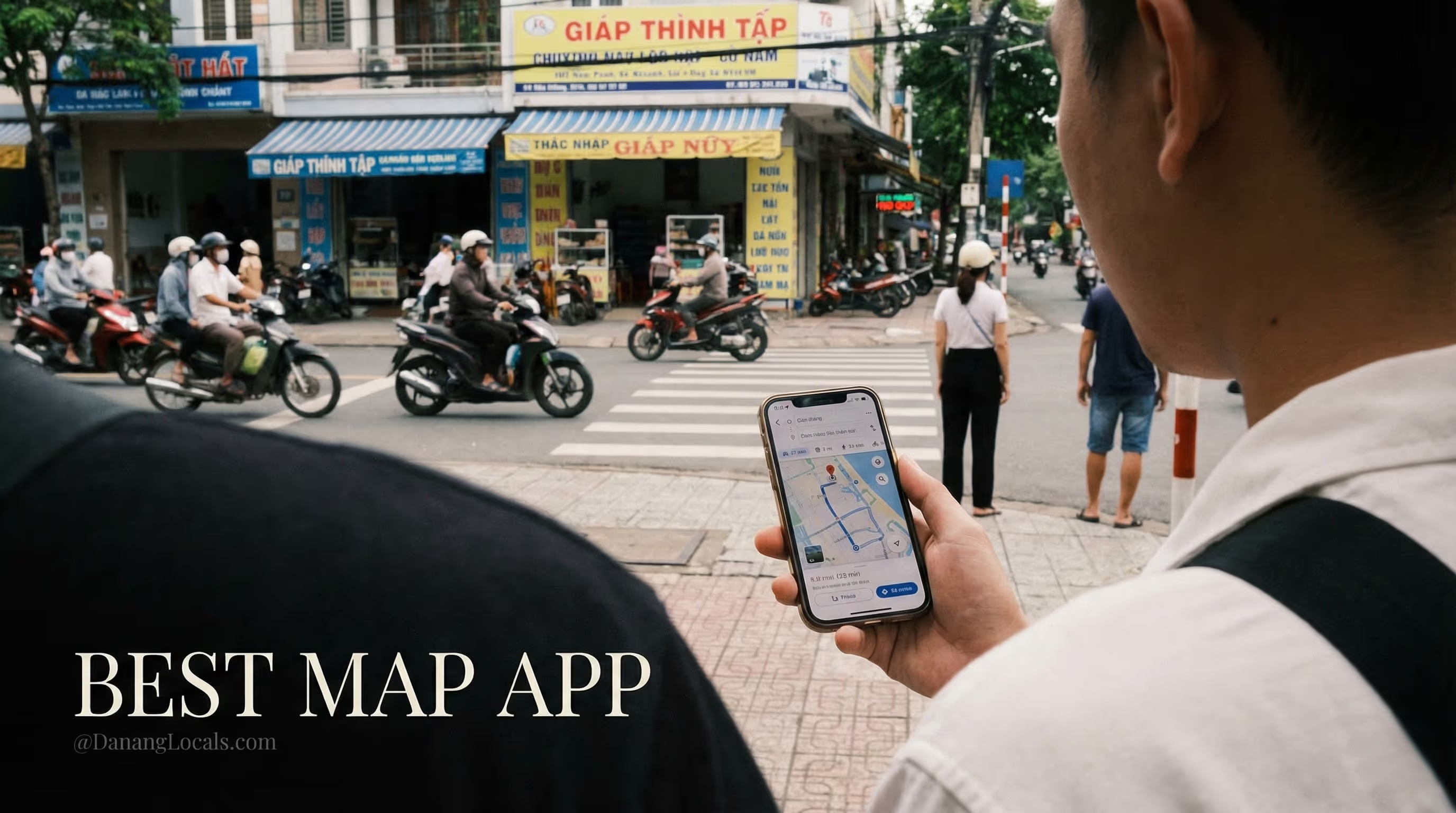
Local Insight (DanangLocals): Download the Offline Map! If you are driving the loop around the Son Tra Peninsula, the signal will drop near the giant Banyan Tree and the Lighthouse. Having the map downloaded ensures you don't get stuck at a fork in the road without guidance.
What are the Must-Ride Routes for a Local Experience?
If you are confident on a bike, getting around Da Nang transforms from a chore into an adventure. There are roads here that will make you want to drive forever.
There is a feeling of absolute freedom when driving along the coast with the salty wind in your face.
Is the Hai Van Pass Route Safe for Beginners?
The Hai Van Pass is legendary (thanks, Top Gear!), but is it safe? Yes and No. It is safe if you drive slowly, stay in your lane, and check your mirrors. It is dangerous if you are a first-time rider trying to take selfies while driving. The roads are curvy and share space with large fuel trucks.
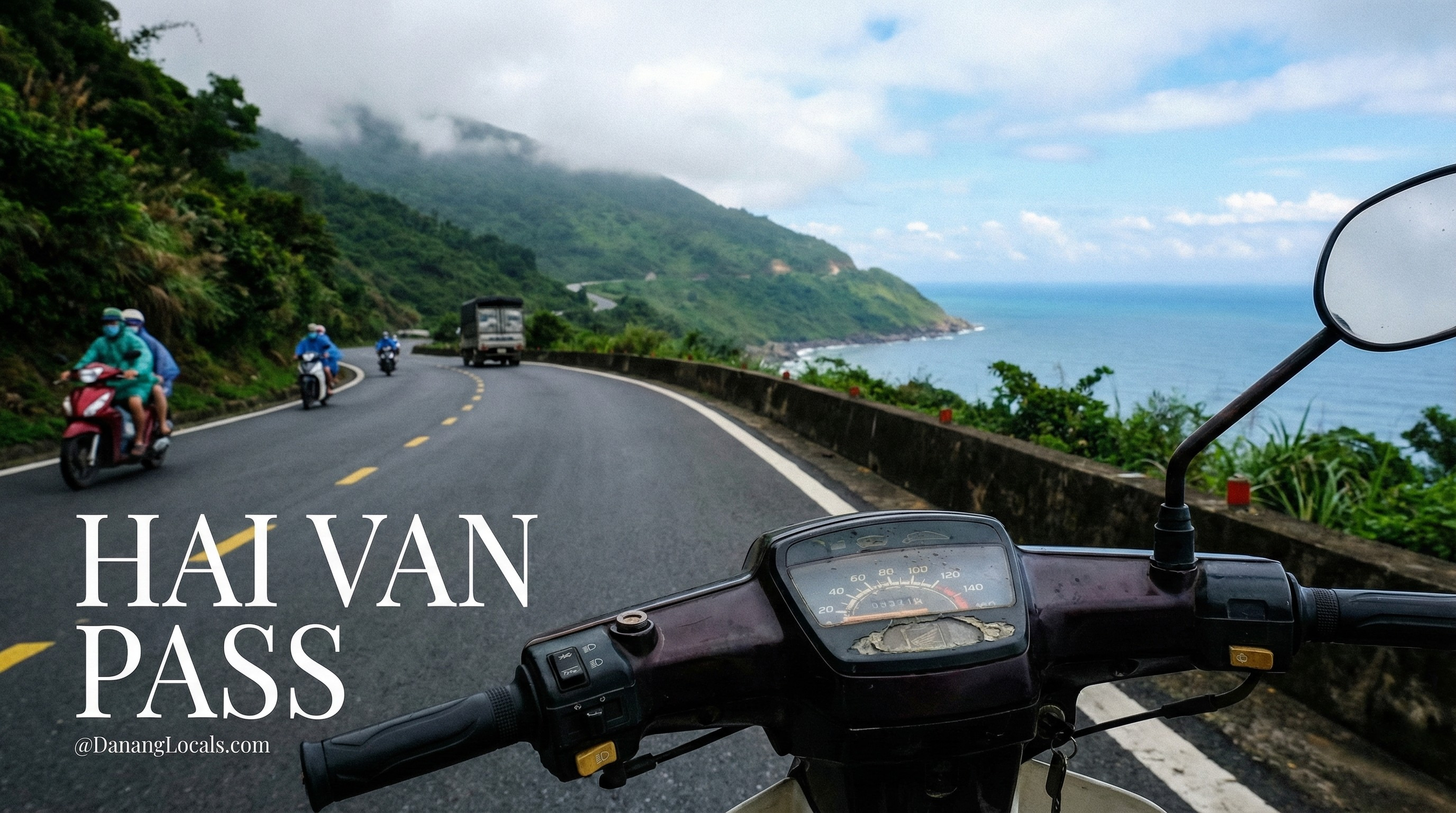
Recommendation: If you are new to riding, book an "Easy Rider" tour where a local drives, and you sit on the back to enjoy the view.
Route: Da Nang -> Hai Van Pass -> Lang Co Bay -> Return.
What is the Most Scenic Coastal Route in the City?
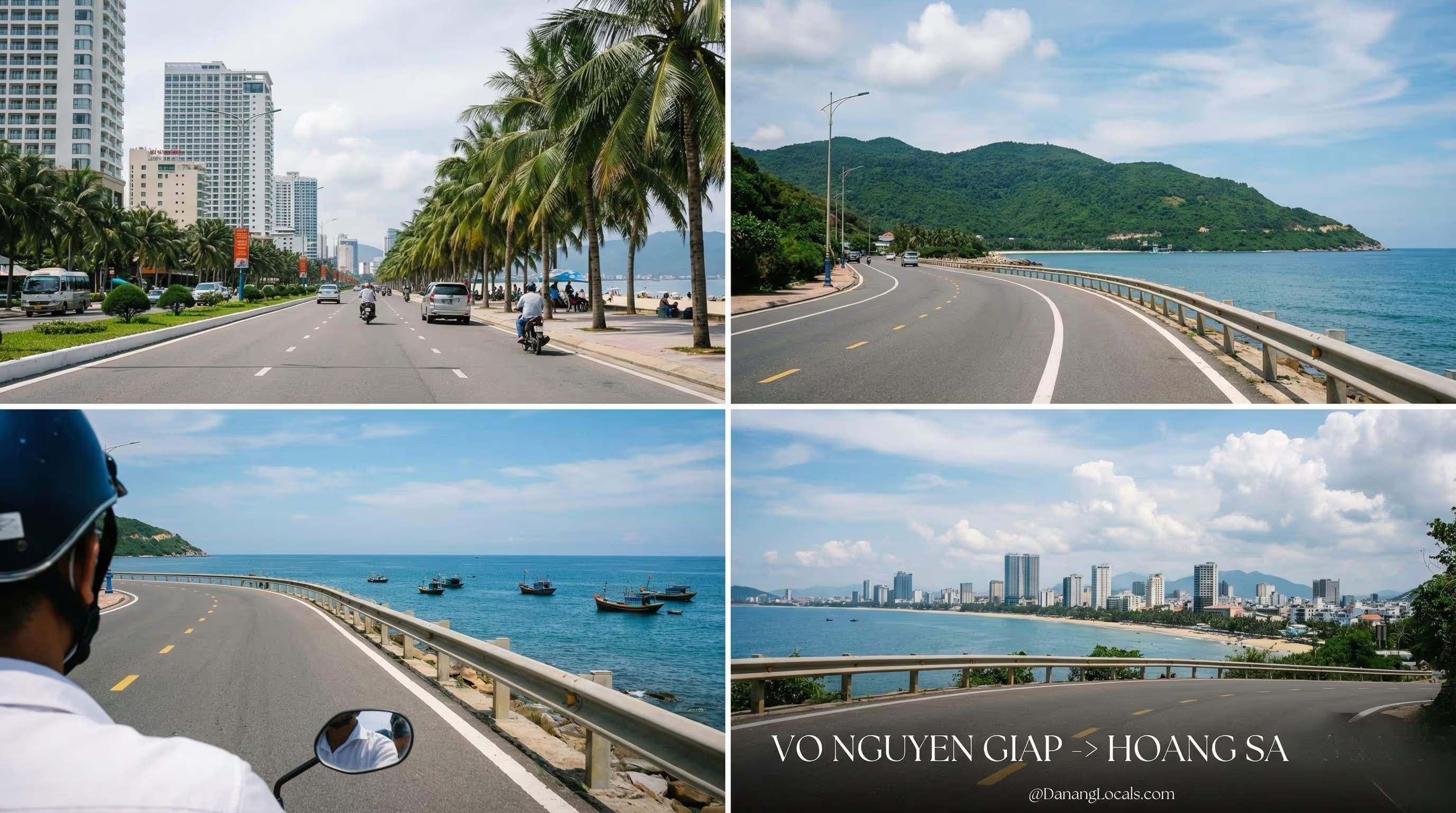
For a less intense but equally beautiful ride, take the Vo Nguyen Giap -> Hoang Sa route. This road runs parallel to the ocean, starting from My Khe Beach and winding its way up toward the Lady Buddha statue.
Best Time: 5:30 AM for sunrise or 5:00 PM for the "golden hour" light.
The Vibe: On one side, you have luxury resorts; on the other, the endless East Sea. It is wide, well-paved, and incredibly photogenic.
Is it Legal for Tourists to Drive Motorbikes in Da Nang?
This is the most common question we get at DanangLocals.com. There is a lot of misinformation online. Let's clear it up so you can enjoy getting around Da Nang without legal anxiety.
Traffic police in Da Nang are strict but generally fair. They target unsafe driving and lack of helmets.
What are the Requirements regarding International Driving Permits (IDP)?
Technically, to drive legally in Vietnam, you need a valid Vietnamese driving license or an International Driving Permit (IDP) that is ratified under the 1968 Vienna Convention.
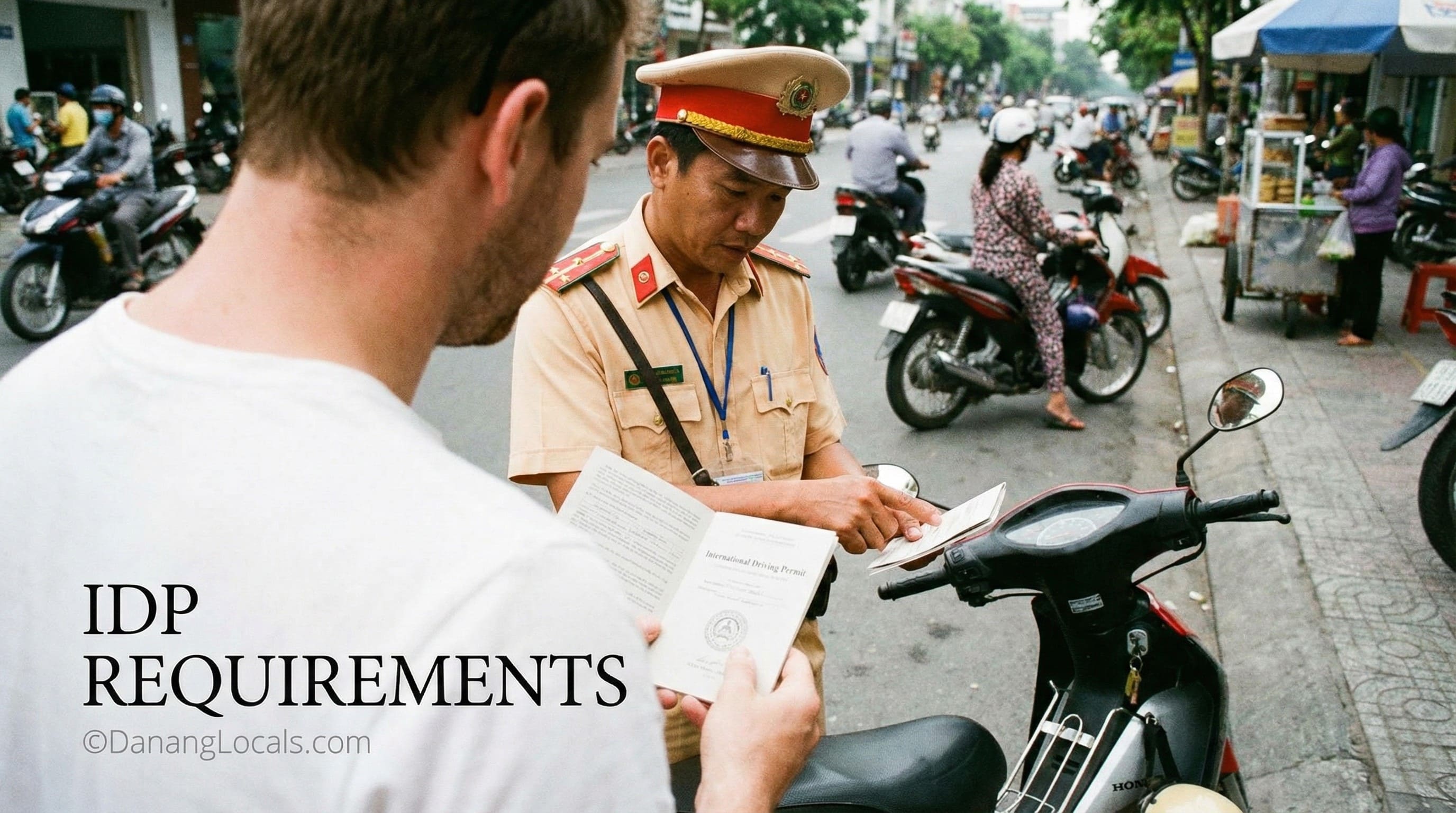
Note: Many IDPs (like those from Australia or the USA) are under the 1949 Convention, which is technically not accepted, though enforcement varies.
The Loophole (50cc): You do not need a license to drive a motorbike with an engine capacity of 50cc or less. These are slower and smaller, but 100% legal for anyone over 16. If you have no license, rent a 50cc.
Do You Need to Wear a Helmet in Vietnam?
Yes. Absolutely. Non-negotiable. Wearing a helmet is mandatory for both the driver and the passenger. The fine is relatively small (around 500,000 VND), but the risk to your life is huge.

Local Insight (DanangLocals): Do not use the flimsy "fashion helmets" (looks like a baseball cap) that some rental shops give you for free. They are useless in a crash. Go to a shop and buy a standardized helmet (Brand names like Andes or Royal) for about 300,000 VND ($12). Your head is worth more than $12.
How Does Da Nang Traffic Compare to Hanoi and Ho Chi Minh City?
If you have survived the "organized chaos" of the Old Quarter in Hanoi or District 1 in Saigon, you might be dreading the traffic here.
Relax. Take a deep breath. Da Nang is different.
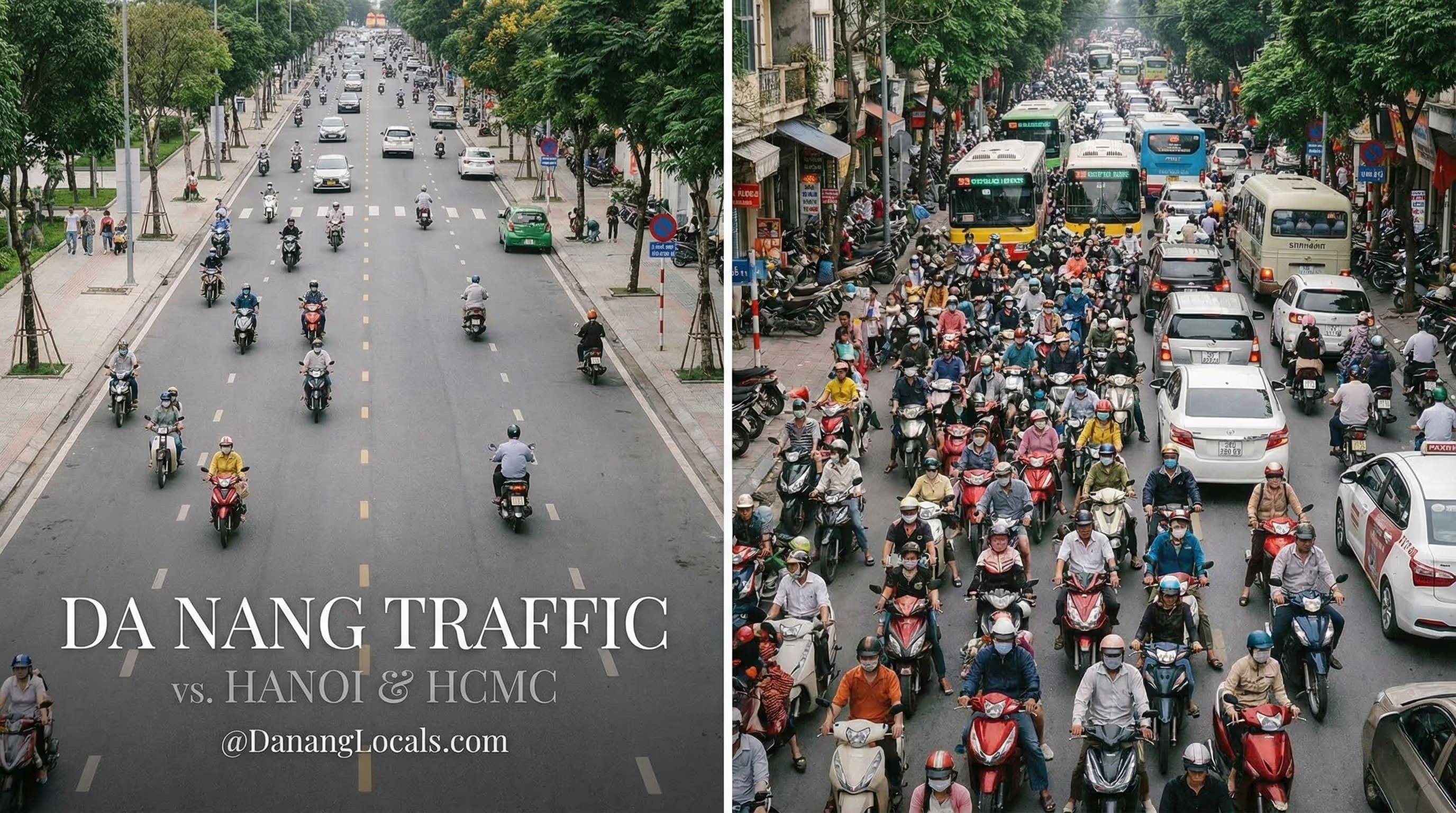
Is Da Nang Traffic Chaotic or Manageable?
Da Nang is often called "the most livable city in Vietnam," and traffic is a big reason why. Compared to the frenetic energy of HCMC, getting around Da Nang feels like a walk in the park.
Density: Much lower. You rarely get stuck in gridlock for hours.
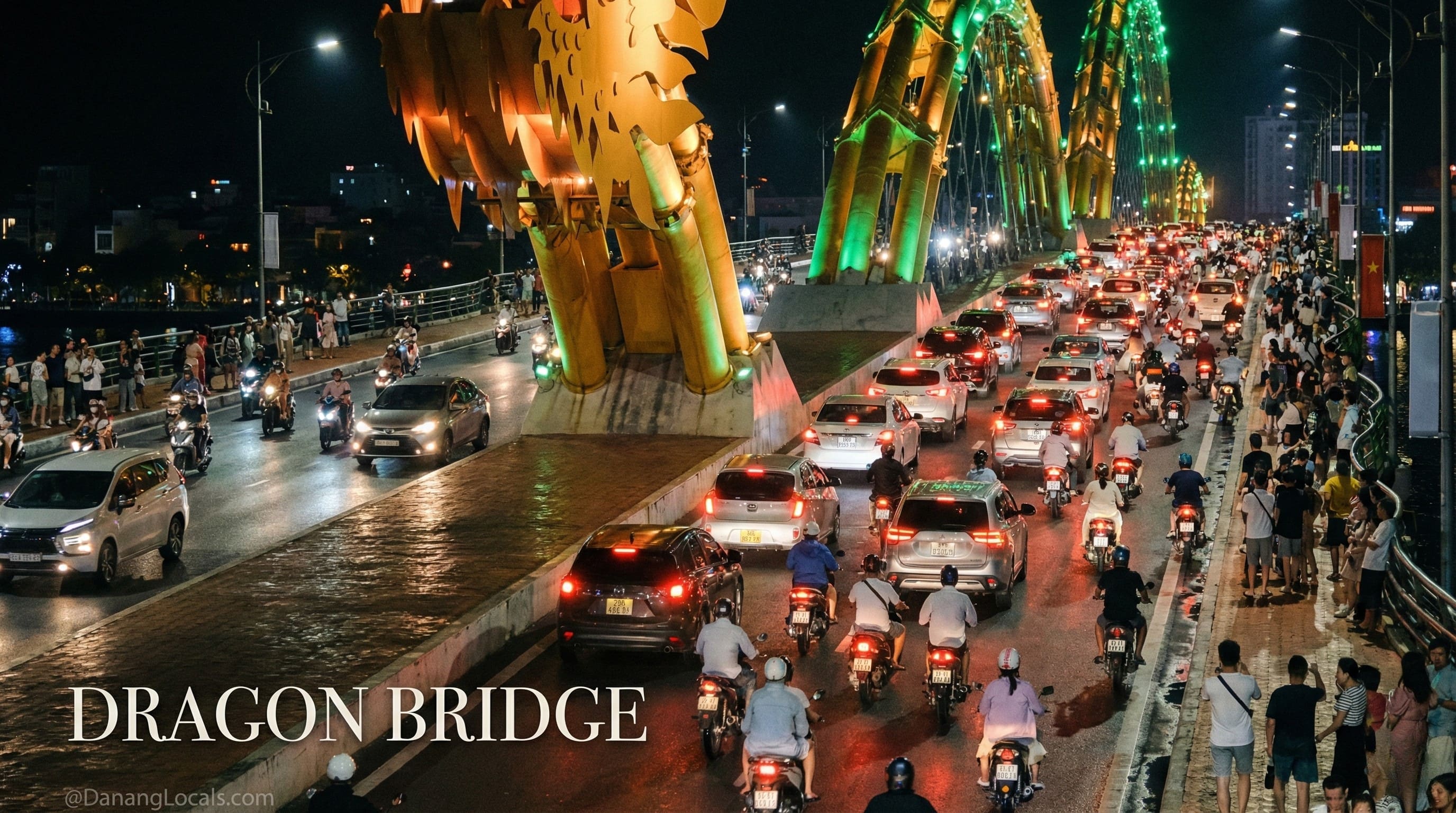
Infrastructure: The roads are wide. The Dragon Bridge and Han River Bridge have dedicated lanes.
Pace: People drive slower here. There is less aggression.
However, be careful during "Rush Hour" (5:00 PM - 6:00 PM) specifically at the roundabouts near the Dragon Bridge tail. It can get messy there.
What are the "Hidden" Traffic Rules and Local Tips?
To truly blend in and master getting around Da Nang, you need to understand the unwritten language of the road. These are things you won't find in a guidebook.
Driving here is a flow, like a river. You don't block the flow; you merge with it.
What Does Honking Mean in Vietnam?
In the West, a horn means "Hey! Watch out! You made a mistake!" or anger. In Vietnam, a horn simply means: "Hello, I am here." It is a sonar system. If a truck honks at you, don't get angry or startled. They are just letting you know they are passing on your left so you don't swerve.
How to Handle Encounters with Traffic Police (CSGT)?
If you are flagged down (usually a police officer in a yellow uniform blowing a whistle and pointing a baton at you), remain calm.
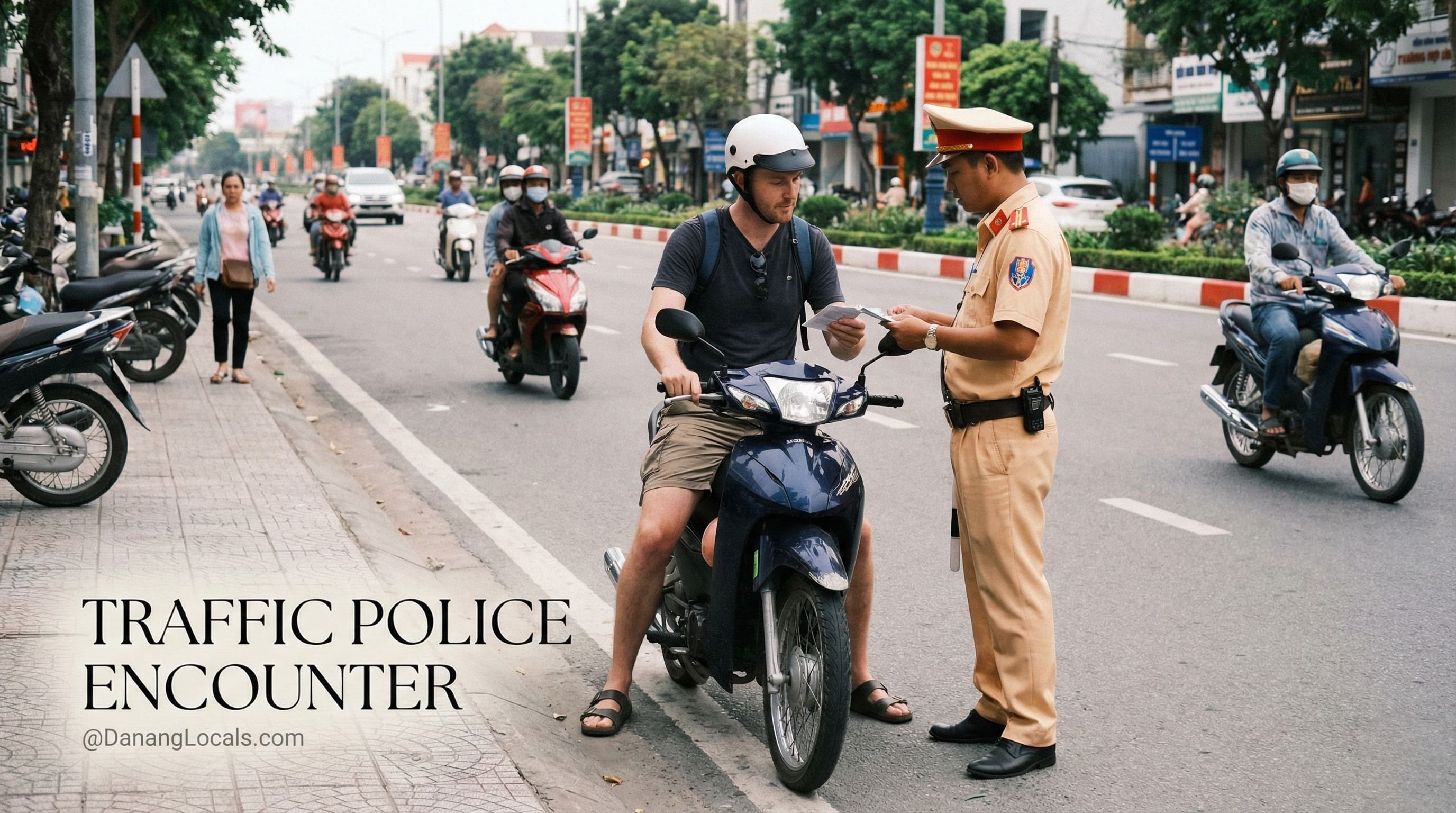
Stop immediately and safely.
Smile and be polite. Aggression never works.
Show your papers: IDP (if you have it), bike registration (blue card from rental shop).
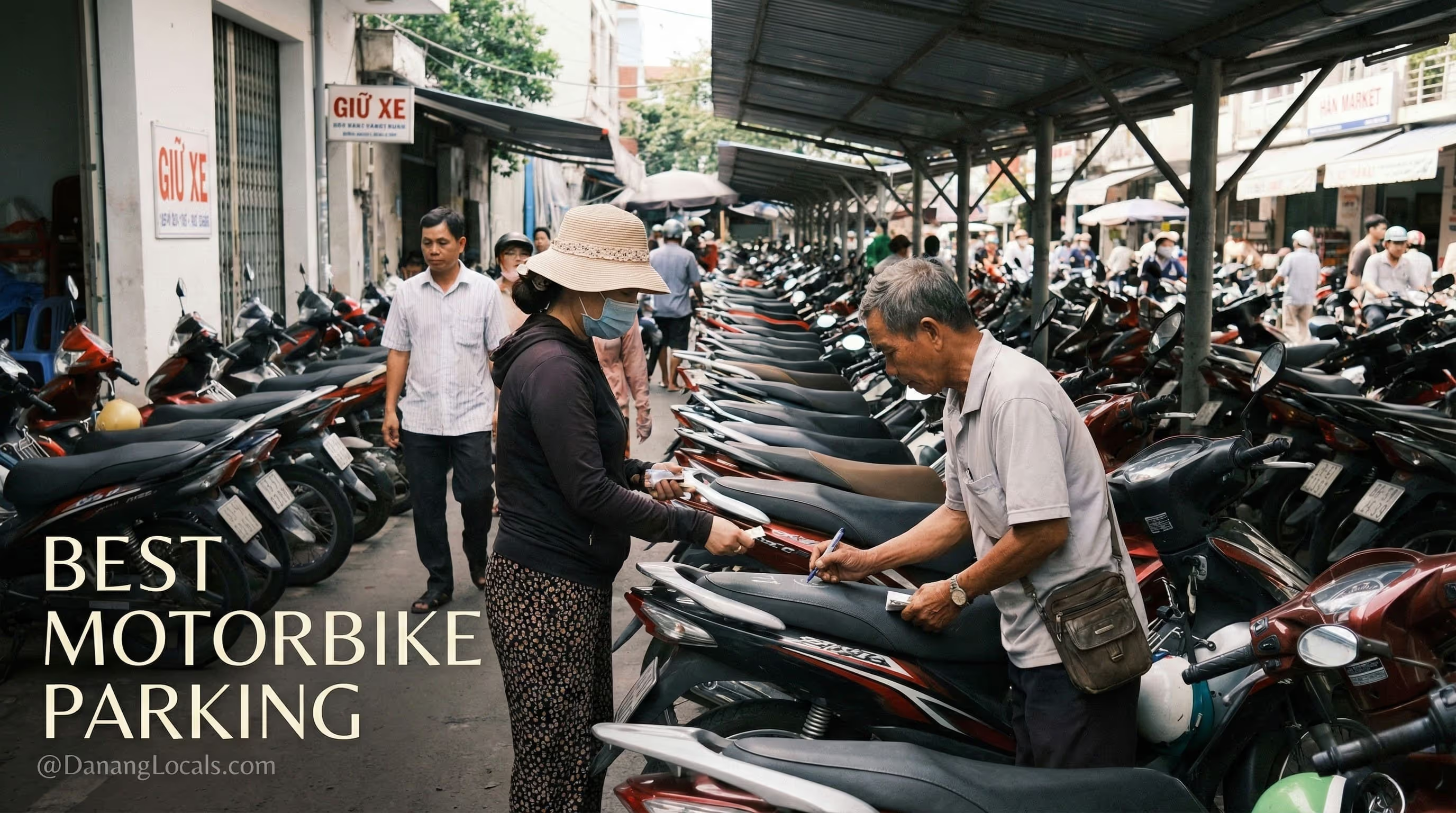
Where are the Best Places to Park Your Motorbike?
You cannot just leave your bike anywhere. Look for signs that say "Giữ Xe" (Keep Bike).
Sidewalks: Most restaurants and cafes have a security guard who will arrange your bike. It is usually free if you are a customer.
Public Places (Beaches/Markets): You will see designated parking lots.
Cost: Standard fee is 5,000 VND to 10,000 VND.
Warning: Do not lose the parking ticket (usually a laminated number or a chalk mark on your seat).
📍 EMERGENCY SUPPORT (Save for Later): If you have a flat tire or breakdown in a remote area:
SOS Da Nang (Volunteer Team): Search "Đội SOS Đà Nẵng" on Facebook for the latest hotline.
Local Mechanic: Look for signs saying "Sửa Xe" (Repair Bike).
Getting around Da Nang is an adventure in itself. Whether you are cruising over the Dragon Bridge on a motorbike or enjoying the AC in a Xanh SM taxi, the journey is part of the destination.
If you are looking for more specific advice on where to go once you've mastered the roads, or if you need help finding a reliable bike rental, don't hesitate to reach out to us.
Would you like me to recommend a specific 3-day itinerary that optimizes these transport routes for the best sightseeing?
Explore more on DanangLocals.com: